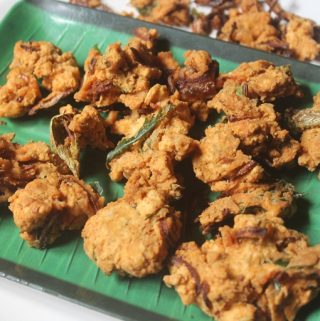
Pakoda is a typical South Indian fried snack that everyone loves. Whether it’s rainy weather, a casual get-together, or craving something hot, crunchy, and flavorful, this recipe is a great choice. These pakodas are crispy on the outside and soft on the inside making every bite so delicious.
South Indian Pakoda Recipe
Spicy, crunchy slices of heaven. These pakodas taste amazing hot with a cup of chai on a rainy day or on a cold evening. Pakoda is my husband’s favourite. He loves any crunchy pakoda with his cup of tea. This one in particular turned out to be very similar to the bakery style.
Jump to:
About Pakoda
In my house, tea time is incomplete without hot fritters like pakoda, bajji, bonda and vadai. This snack is not only loved at home but is also popular in teahouses and a weeknight staple across the country.
While the spices and preparation may vary from region to region, the basic ingredients remain the same and result in a simple, flavorful snack that everyone loves.
The main tip for making pakodas that are crispy but melt in your mouth is to make the dough really stiff, so use a little water. Adding hot oil or ghee to the dough also makes it crispier.
Similar Recipes
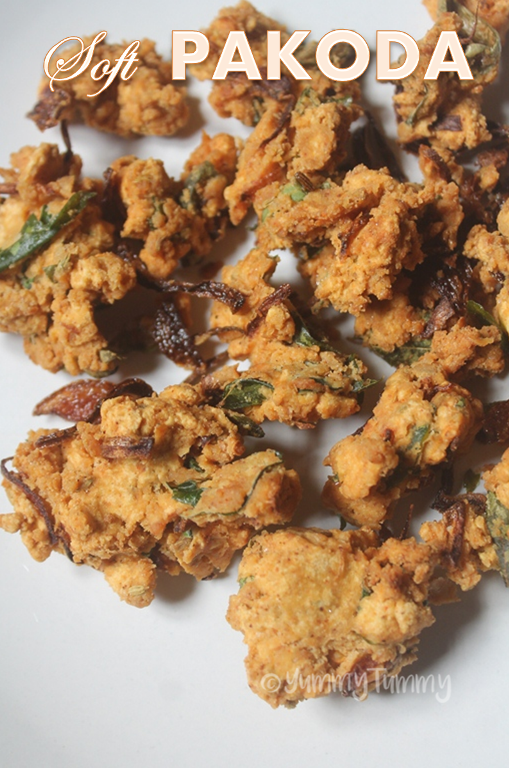
This pakoda is made from thinly sliced onions, gram flour, rice flour, green chilies and a mixture of everyday spices. The batter is mixed well and fried until the pakodas turn golden brown and crispy.
These pakodas are a comforting and satisfying snack that go great with a cup of hot masala tea, ginger tea or coffee. It’s truly an interesting combination that instantly brightens up your tea time.
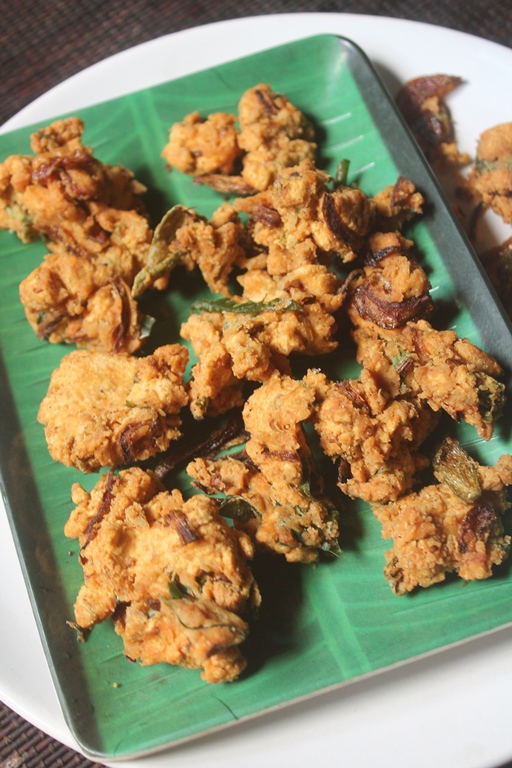
Ingredients
- Gram flour: Gram flour is used as a binding agent that holds all the ingredients together when frying. It also adds a hint of nutty flavor and gives the pakodas a beautiful golden yellow color when fried.
- Rice flour : Rice flour is added to make the pakodas extra crispy and crunchy making every bite satisfying.
- Chili powder: Chilli powder adds heat and color to the pakodas. You can adjust the amount based on your spice level.
- Fennel/Saunf/Sombu Seeds: Fennel seeds are an aromatic spice that adds a light sweetness and enhances the overall taste.
- Curry leaves: Curry leaves provide an authentic South Indian aroma and add flavor when fried.
- Onion : Onions are the main ingredient in this recipe. Slice it thinly and when fried it becomes soft and slightly sweet inside.
- green chilies: Green chilies add a spicy and fresh taste to the pakodas. Adjust the amounts based on your spice tolerance.
- Baking soda : Baking soda is the main ingredient that helps produce pakodas that are soft inside and tender when fried.
- Oil : Oil is used for frying. This helps the pakodas cook golden brown and crispy. You can use vegetable oil, peanut oil, or canola oil of your choice.
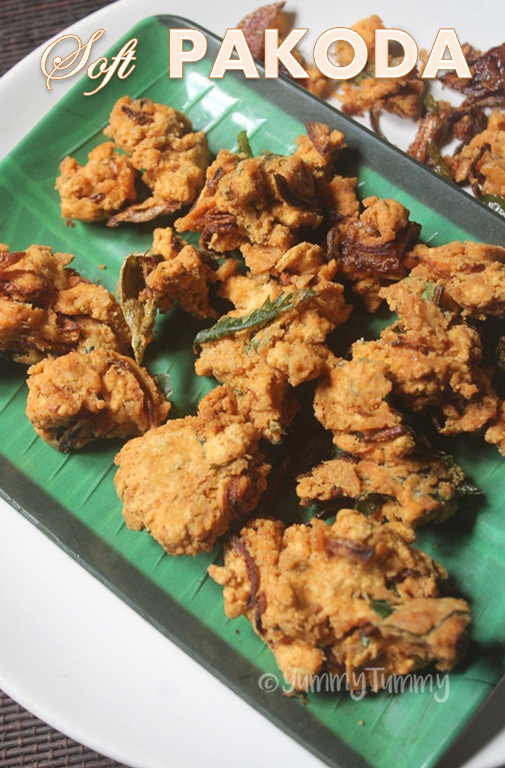
Step by Step Images
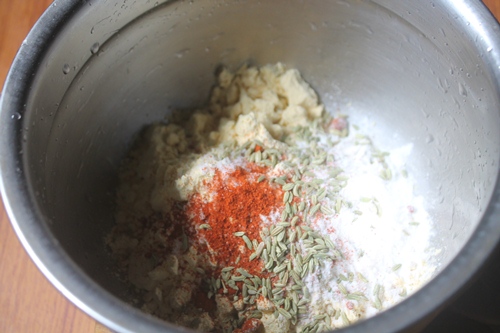
1)take gram flour, rice flour and salt in a bowl.
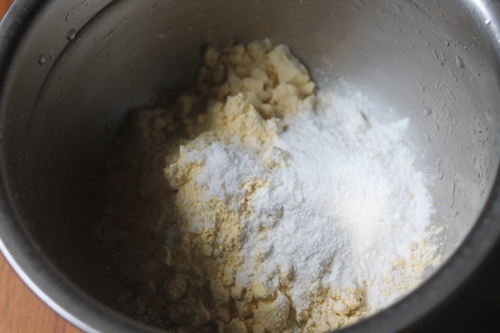
2)Add red chili powder, fennel seeds and mix well.
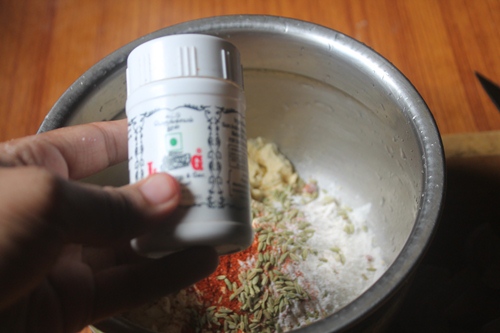
3)Add a pinch of asafoetida and mix well.
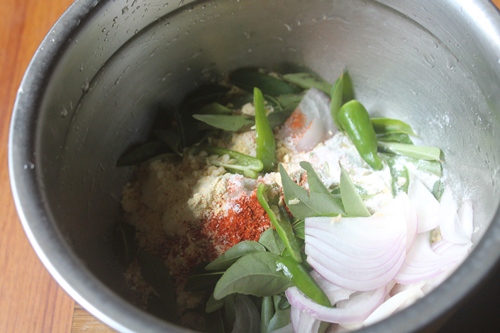
4)Add sliced onions, green chilies, curry leaves.
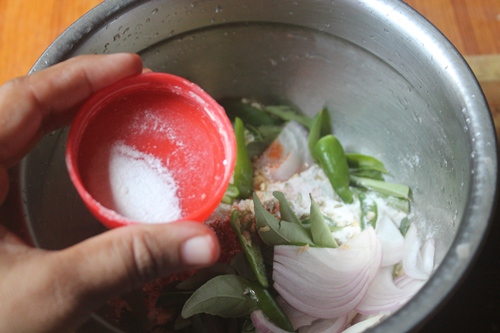
5) Add a pinch of baking soda. Stir well.
6) Pour in some hot oil.
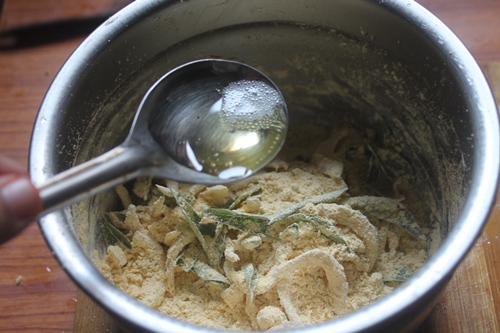
7)Mix the oil into the flour mixture.
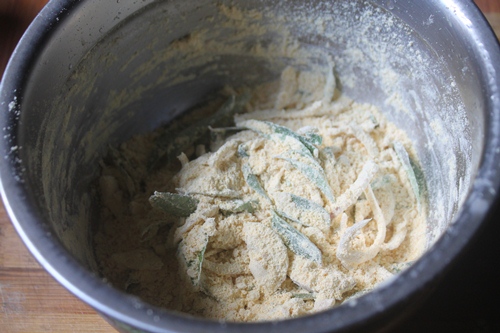
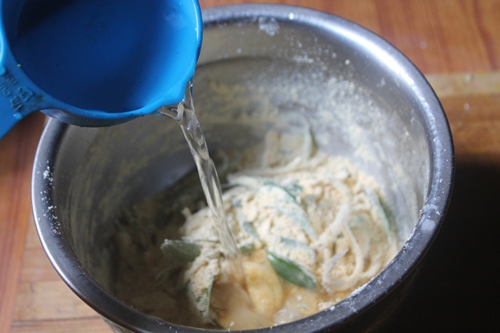
8) Pour some water into the flour and make a thick dough.
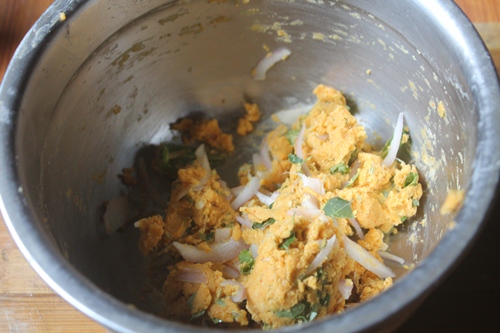
9) The mixture should be thick like this.
10)Heat oil in a kadai. Put a small portion of the pakodas in the oil.
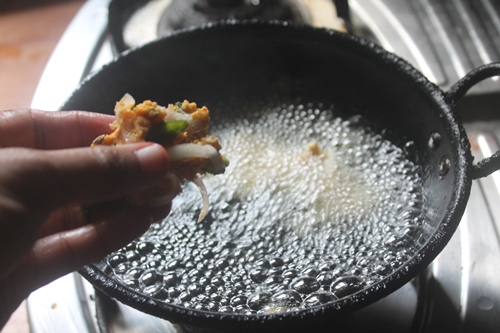
11)Fry until golden brown and crispy over medium heat.
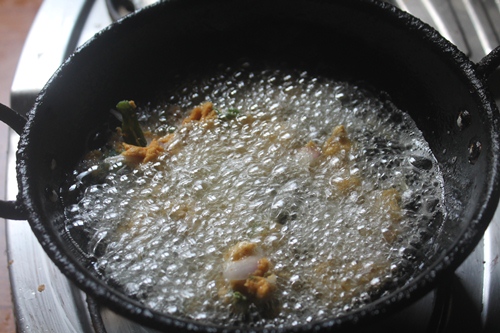
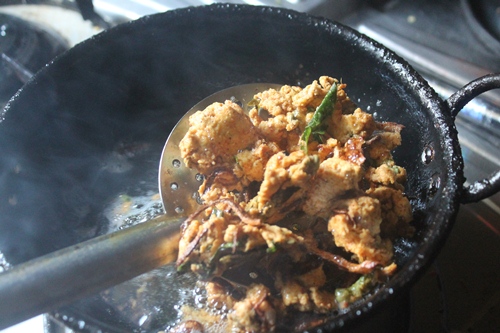
12) Strain the pakodas from the oil using a slotted spoon.
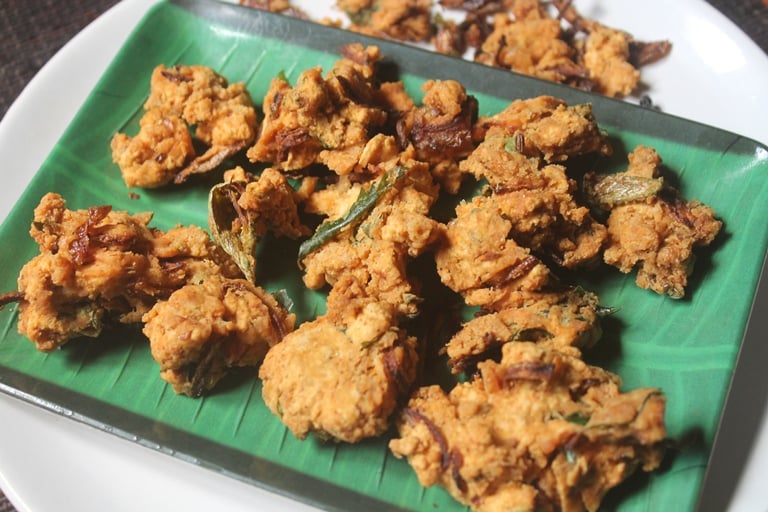
13) Serve hot.
Expert Tips
Thin slices: Make sure to thinly slice the onion. This ensures the pakodas cook evenly and makes them extra crispy.
Avoid adding too much water: The pakoda batter should be thick. Add water little by little gradually. Usually the moisture from the onion is enough to form a dough. So, sprinkle a little if needed.
Oil temperature: Fry the pakodas in medium hot oil. If the oil is too hot, the outside of the pakoda will quickly brown, but the inside will still not be cooked. Oil that is not hot enough will absorb too much oil and become mushy.
Mix before frying: If making a large batch, mix gram flour and rice flour with the onion spice mixture before frying.
Don’t overcrowd: Fry the pakodas a few at a time so that they cook crispy evenly.
Storage : If you have leftover pakodas, turn them into kuzhambu pakodas, like my mom used to do. These pakodas are perfect to pair with a cup of hot masala tea, ginger tea or coffee in the evening or on a rainy day.
Portion: Pakoda are best served fresh and hot after frying.
General Questions
This usually happens if the mixture is a little runny or the oil is not hot enough. Make sure the pakoda batter is thick and fry in hot oil.
For a healthier version, you can air fry the pakodas. Spray some oil on them to get a crispy texture without frying.
No, they are slightly different. Both pakoda and bajji use similar materials, but the texture is different.
📖 Get Recipes
South Indian Pakoda Recipe
Pakoda is a typical South Indian fried snack that everyone loves. Whether it’s rainy weather, a casual get-together, or craving something hot, crunchy, and flavorful, this recipe is a great choice. These pakodas are crispy on the outside and soft on the inside making every bite so delicious.
Nutrition
Nutrition Facts
South Indian Pakoda Recipe
Amount per Serving
% Daily Value*
* Percent Daily Values are based on a 2000 calorie diet.
Share Recipes
PakarPBN
A Private Blog Network (PBN) is a collection of websites that are controlled by a single individual or organization and used primarily to build backlinks to a “money site” in order to influence its ranking in search engines such as Google. The core idea behind a PBN is based on the importance of backlinks in Google’s ranking algorithm. Since Google views backlinks as signals of authority and trust, some website owners attempt to artificially create these signals through a controlled network of sites.
In a typical PBN setup, the owner acquires expired or aged domains that already have existing authority, backlinks, and history. These domains are rebuilt with new content and hosted separately, often using different IP addresses, hosting providers, themes, and ownership details to make them appear unrelated. Within the content published on these sites, links are strategically placed that point to the main website the owner wants to rank higher. By doing this, the owner attempts to pass link equity (also known as “link juice”) from the PBN sites to the target website.
The purpose of a PBN is to give the impression that the target website is naturally earning links from multiple independent sources. If done effectively, this can temporarily improve keyword rankings, increase organic visibility, and drive more traffic from search results.
Comments are closed, but trackbacks and pingbacks are open.