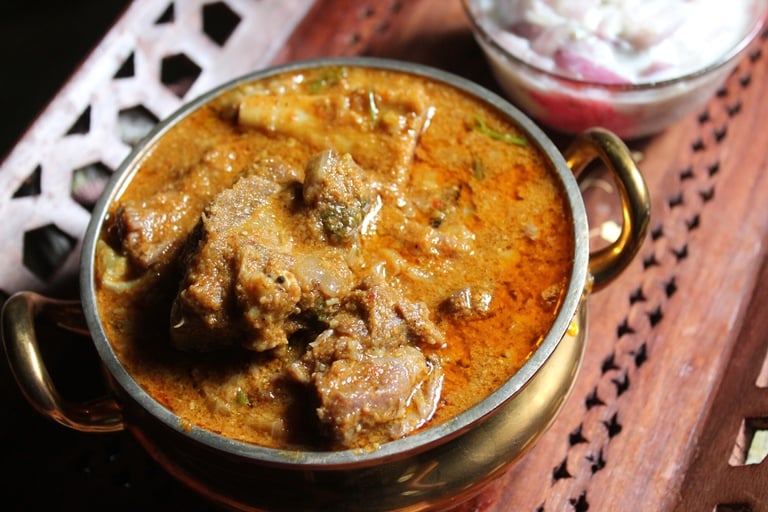
Lamb curry is a rich and flavorful curry made with tender lamb, onions, spices and coconut paste. It is a thick and richly aromatic curry that goes well with hot rice, idli, dosai, chapathi, appam, idiyappam, parotta and Poori. . The curry is slow cooked developing the flavor of the mutton making it a perfect side dish.
Lamb Curry Recipe
This curry is made from goat meat with bones and the pieces are cut into large pieces. It tastes great with anything, especially chapati, rice, curd rice, coconut rice, parotta or whatever your heart desires.
Jump to:
In every South Indian home, mutton curry is a go-to dish for the Sunday menu and this week I wanted to try something different from the usual preparation.
About Lamb Curry
Lamb curry is a spicy, flavorful curry made with fresh masala, coconut, coconut milk. The curry has sliced fried onions added at the end to make the curry super flavorful.
This lamb curry is a simple and flavorful dish inspired by the flavors of South India. The taste is so rich and comforting that it goes well with rice, idli, dosai, chapathi, appam, idiyappam, parotta and Poori.
Similar Recipes
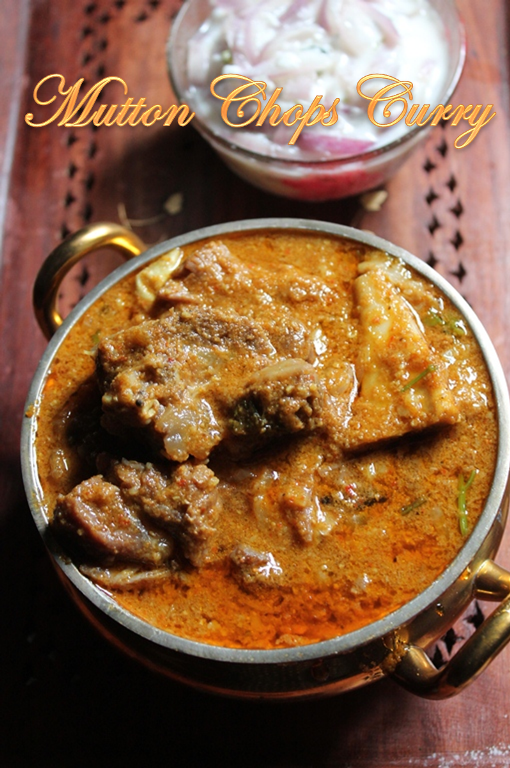
This meat curry is prepared with basic kitchen ingredients such as shallots, coconut, ginger, garlic and many whole spices used to bring out a rich and deep aromatic taste. The meat is cooked in a pressure cooker with fresh spices like poppy seeds, dried red chilies, fennel seeds, coriander seeds, cumin seeds.
Once the meat is cooked, whole spices and onions are mashed with coconut oil and added to the curry. This provides a rich taste and improves the overall taste.
For best results, try using all the spices listed under masala. You can swap dry red chilies for Kashmiri chilies for less spiciness if needed.
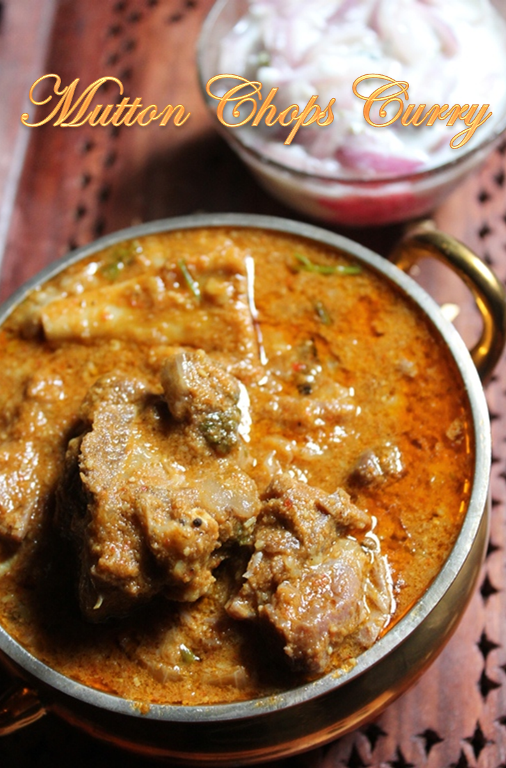
Ingredients
- Lamb: Use tender pieces of mutton as it will add a rich meaty flavor to the curry. Slow cooking makes it tender, juicy, and absorbs the flavors of the spices well.
- turmeric powder: I have only used turmeric powder, no other spice powder is used in this curry. If you want, you can add Kashmiri chili powder or garam masala powder to make it a rich-tasting curry.
- Fresh grated coconut: Freshly grated coconut makes the curry thicker and has a richer texture.
- For Masala : Poppy seeds, dry red chilies, coriander seeds, fennel seeds, cumin seeds, ginger and garlic are ground to a fine paste. This flavorful spice paste gives the curry its distinctive aroma, heat and flavor.
- Coconut oil : Coconut oil is used to grind all the spices. It provides a rich coconut aroma and enhances the taste of the curry. You can also replace it with gingerly oil for an authentic taste.
- Whole spices : Cinnamon, cardamom, cloves, and star anise are ground in hot oil. This gives off a strong aroma and makes the curry more flavorful.
- Onion : Onions add sweetness and crunch when sautéed in oil and added to curries. You can also swap in shallots for a traditional taste.
- Lemon juice: Lemon juice is added at the end for a fresh taste and to balance the overall taste of the curry.
- Coriander leaves : Coriander leaves are used to garnish curries. This improves the taste, appearance and aroma of the curry.
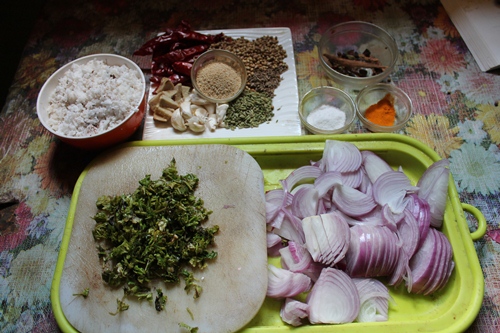
Step by Step Images
Make Fresh Masala
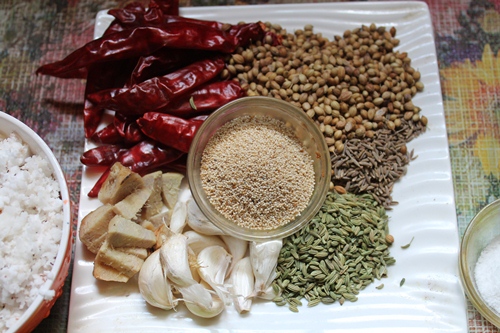
1) Take ingredients for fresh masala.
- 3 tablespoons Poppy Seeds/Kasa Kasa/Khus Khus
- 10 without Dried Red Chilies
- 2 tablespoons Coriander Seeds
- 1 tablespoon Fennel Seeds
- 2 teaspoons Cumin Seeds
- 4 cm Ginger peeled and chopped
- 10 cloves of peeled garlic
2)take all the ingredients in a blender.
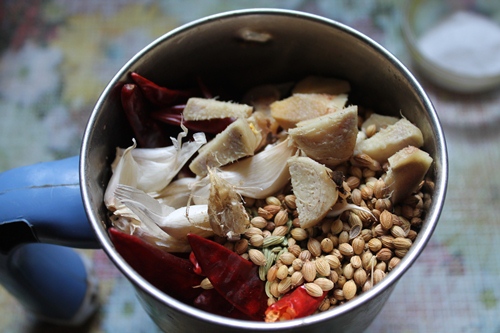
3)Add water little by little and grind until it becomes a smooth paste. Since I used a small blender jar, I ground the coconut separately. If you are using a large blender jar, you can add coconut to it and grind it until it becomes a smooth paste.
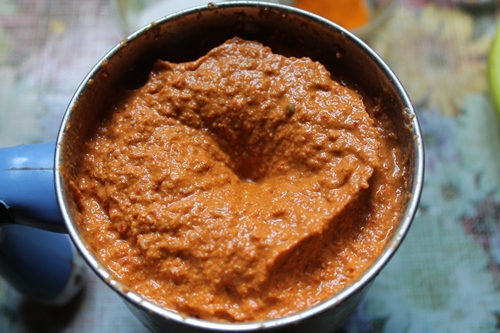
4)Here I added coconut to the blender, added water little by little and blended it.
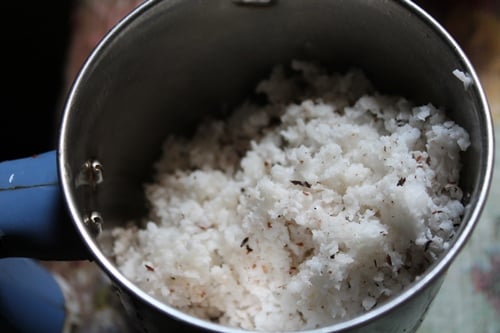
5) Freshly made coconut paste.
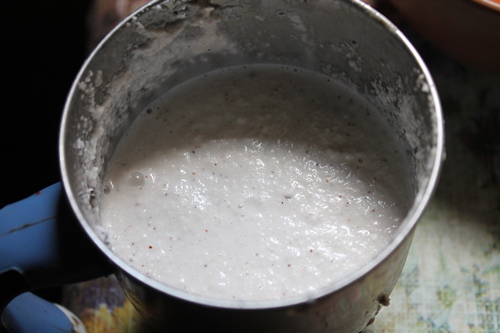
6)Add coconut paste to the freshly ground masala and mix well.
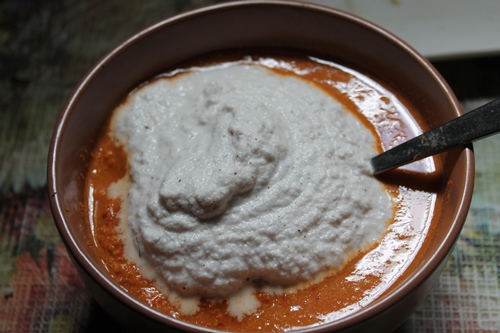
7) This is your freshly ground masala. Set this aside until needed.
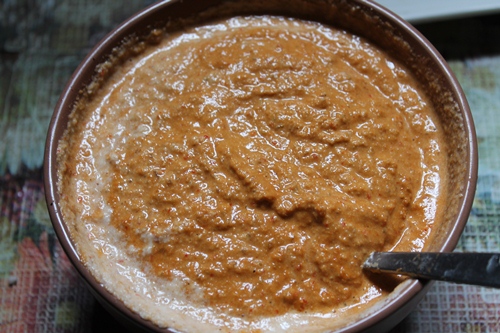
Making Coconut Milk
8) Take fresh coconut into a blender jar, add a little water and blend it.
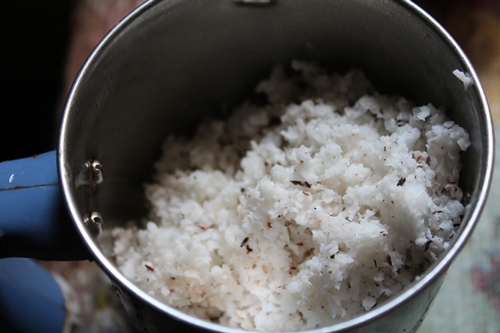
9)Now the coconut has been ground. Instead, you can also use packaged coconut milk.
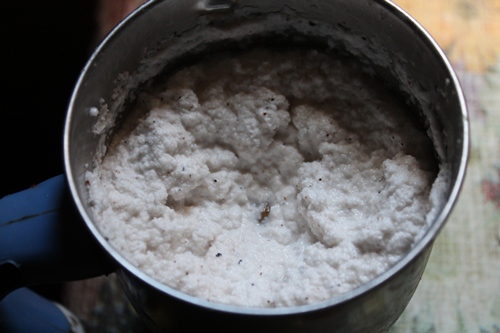
10) Pass through a fine mesh sieve and extract fresh coconut milk.
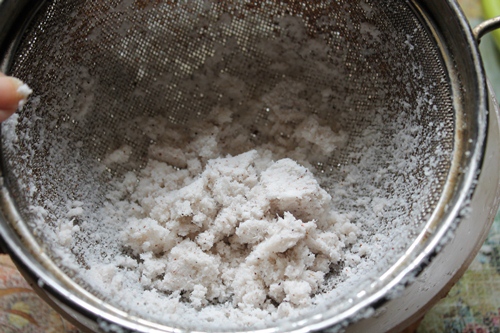
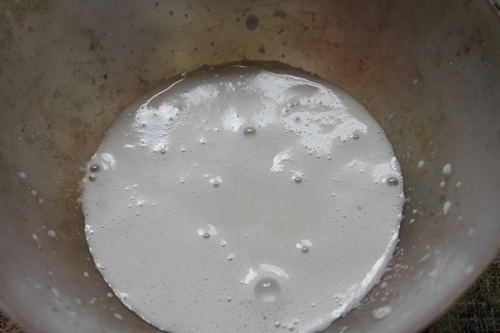
11) Freshly made thick coconut milk is ready. Set aside for a moment.
Pressure cooked goat meat
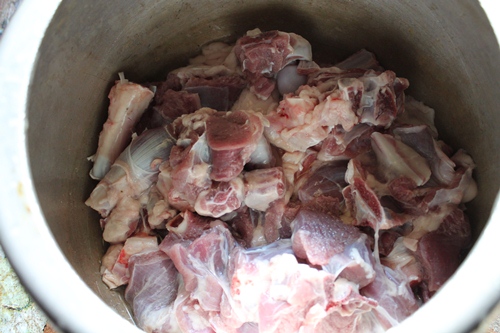
12) Put the mutton pieces into the pressure cooker.
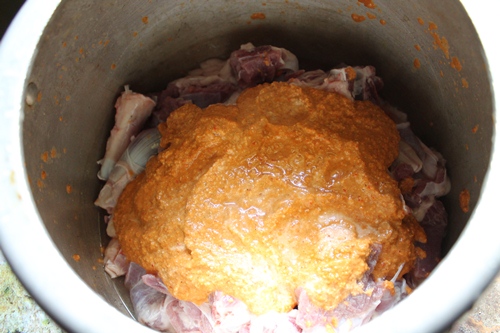
13)Add coconut and fresh masala paste.
14) Pour in the coconut milk.
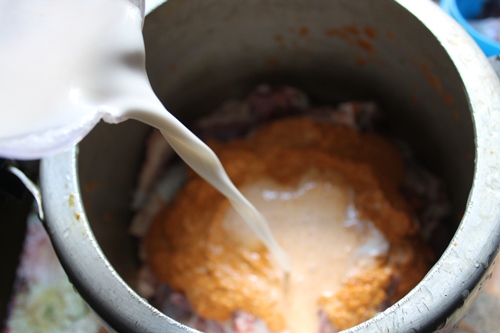
15) Add salt.
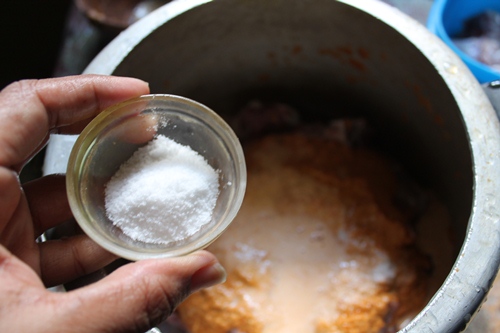
16) Add turmeric powder.
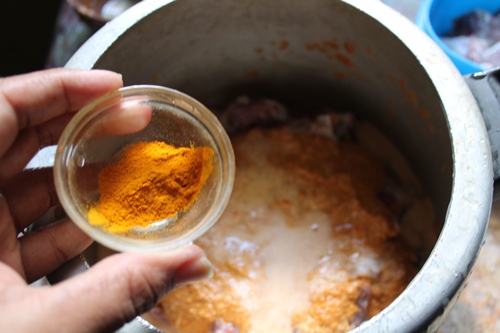
17) Mix well. Cover and pressure cook for 8 whistles, let it simmer for 10 minutes. Turn off the heat and let the steam escape by itself.
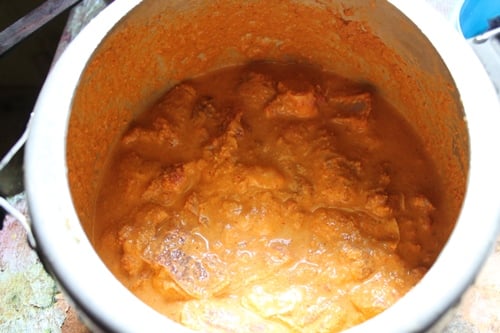
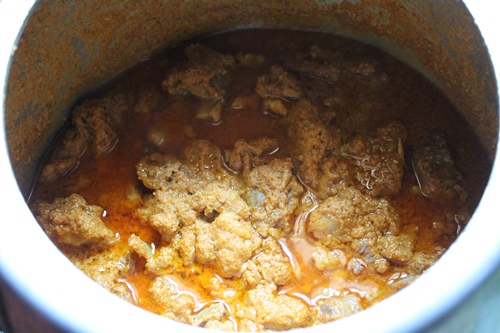
18) The goat meat is cooked. Putting this aside, we will do the tempering now.
Tempering
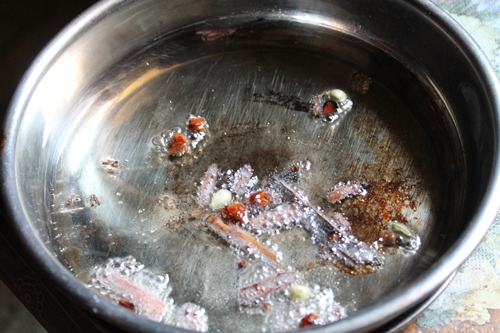
19) Heat coconut oil in a pan. Add the whole spices listed below and heat briefly.
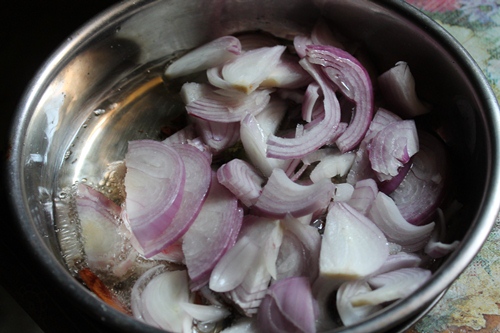
20) Add sliced onions. Fry and cook until the onions are golden brown.
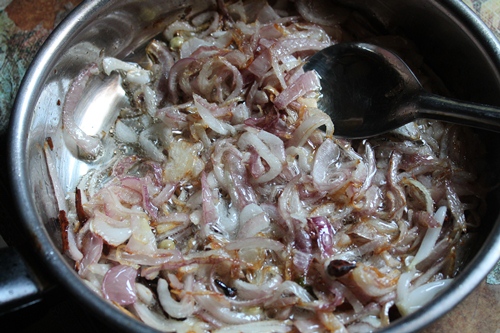
21)Now the onions are fried.
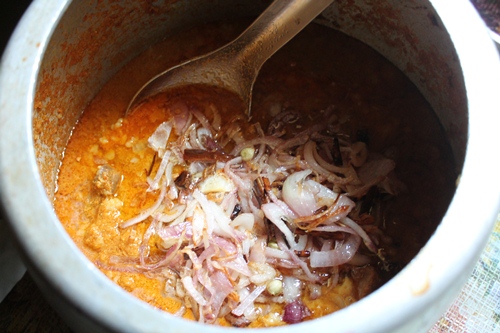
22)Pour this into the curry and mix well.
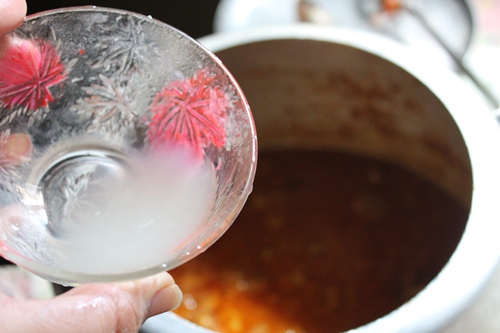
23)Add lemon juice according to taste.
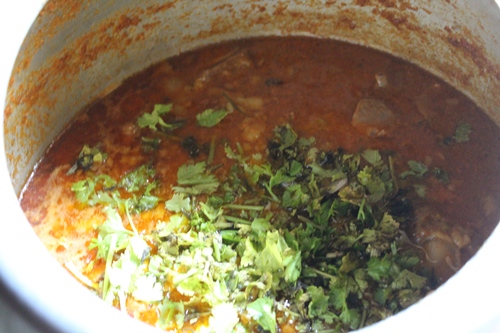
24)Add coriander leaves.
25)Mutton curry is ready.
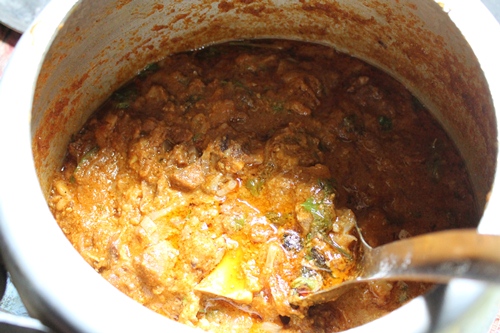
26) Serve hot.
Expert Tips
Grinding masala : Grind the masala paste very finely so that it gives the curry a thick texture and rich taste.
Use bone-in: For this curry, it is best to use mutton pieces with bones. The bones release flavor and create a flavorful and more satisfying gravy.
Adjust seasoning: You can keep the dried red chilies or reduce them to make a mildly spiced curry.
Storage : This lamb curry keeps well in the refrigerator for 2 to 3 days. Reheat over low heat and add a little water if the curry thickens too much.
Serve: Lamb curry tastes best when served hot with white rice. It also pairs well with idli, dosai, chapathi, appam, idiyappam, parotta and Poori.
General Questions
Q. Can I skip the poppy seeds?
Yes, you can omit the poppy seeds if you wish. Alternatively, you can replace it with some cashews to keep the curry soft. The taste and texture may be slightly different, but the curry will taste delicious.
Q. Why is my goat meat tough?
Goat meat, especially those with large bones, takes longer to cook. To ensure tender meat, cook on low heat for longer or cook until it whistles extra. Slow cooking helps the meat absorb the spices and become tender and juicy.
Q. Can I make this curry milder?
Very ! To make the curry less spicy, simply reduce the dry red chilies in the masala. This allows you to make a milder curry that even children can enjoy.
📖 Get Recipes
Lamb Curry Recipe | Goat Curry Recipe
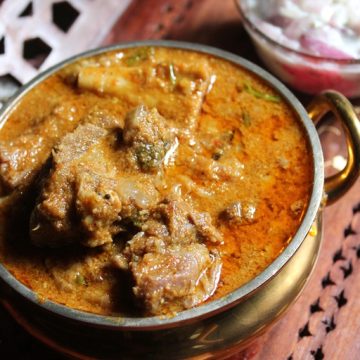
Lamb curry is a rich and flavorful curry made with tender lamb, onions, spices and coconut paste. This is a thick and richly aromatic curry that goes well with hot rice, chapathi, Poori, parotta, appam or idiyappam. The curry is slow cooked developing the flavor of the mutton making it a perfect side dish.
Ingredients
For Freshly Ground Masala
Videos

Nutrition
Nutrition Facts
Lamb Curry Recipe | Goat Curry Recipe
Amount per Serving
% Daily Value*
* Percent Daily Values are based on a 2000 calorie diet.
Share Recipes
PakarPBN
A Private Blog Network (PBN) is a collection of websites that are controlled by a single individual or organization and used primarily to build backlinks to a “money site” in order to influence its ranking in search engines such as Google. The core idea behind a PBN is based on the importance of backlinks in Google’s ranking algorithm. Since Google views backlinks as signals of authority and trust, some website owners attempt to artificially create these signals through a controlled network of sites.
In a typical PBN setup, the owner acquires expired or aged domains that already have existing authority, backlinks, and history. These domains are rebuilt with new content and hosted separately, often using different IP addresses, hosting providers, themes, and ownership details to make them appear unrelated. Within the content published on these sites, links are strategically placed that point to the main website the owner wants to rank higher. By doing this, the owner attempts to pass link equity (also known as “link juice”) from the PBN sites to the target website.
The purpose of a PBN is to give the impression that the target website is naturally earning links from multiple independent sources. If done effectively, this can temporarily improve keyword rankings, increase organic visibility, and drive more traffic from search results.
Comments are closed, but trackbacks and pingbacks are open.