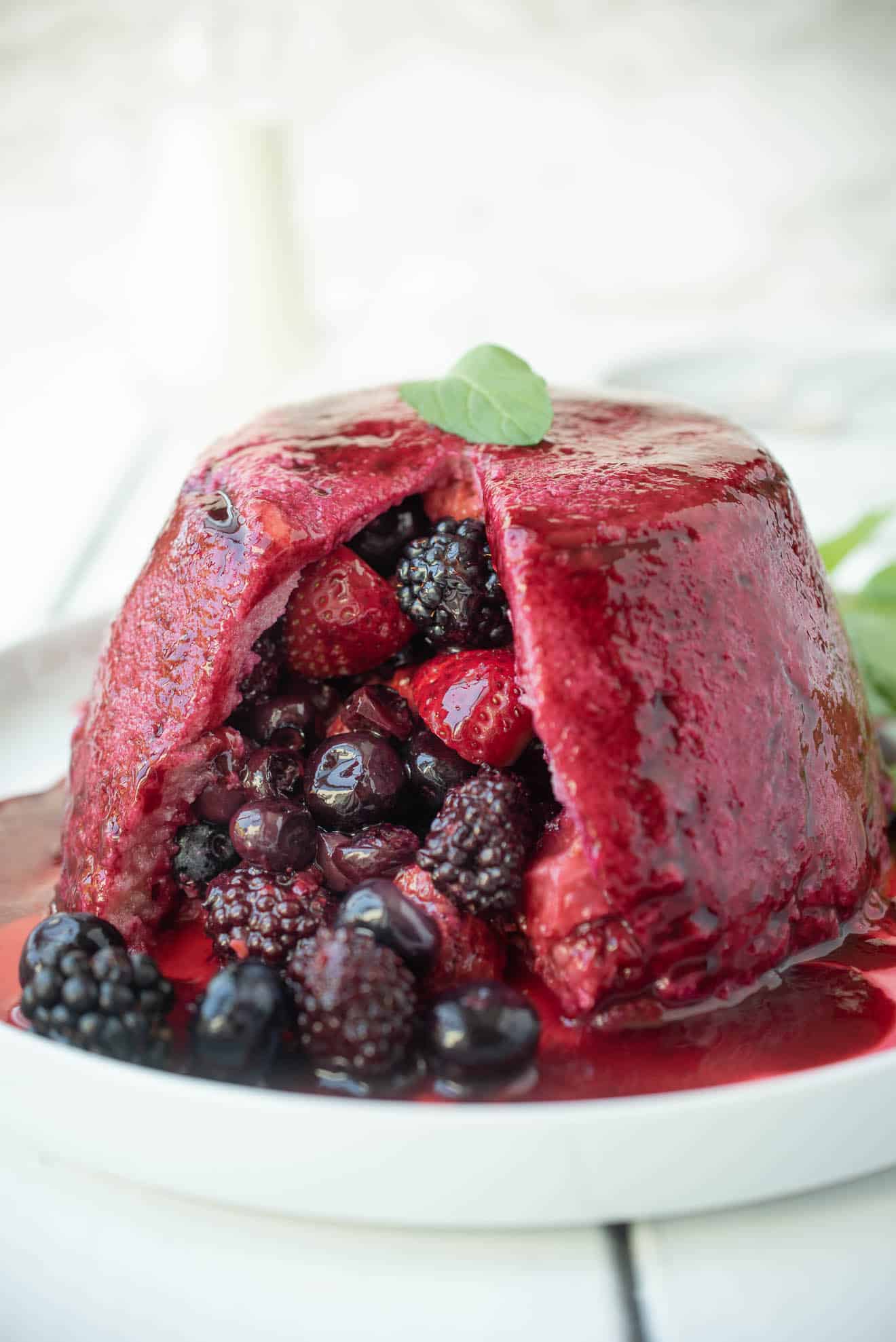
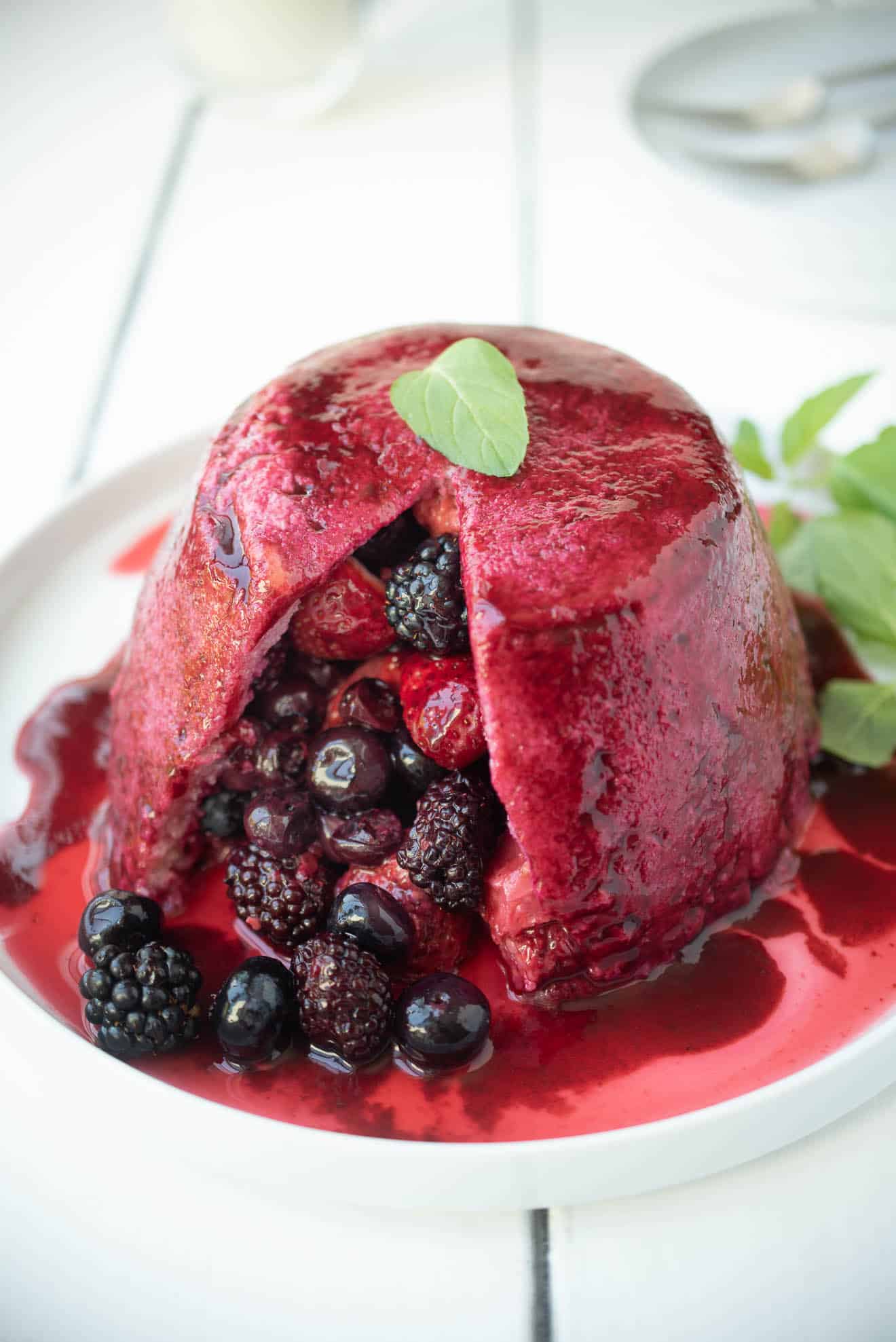
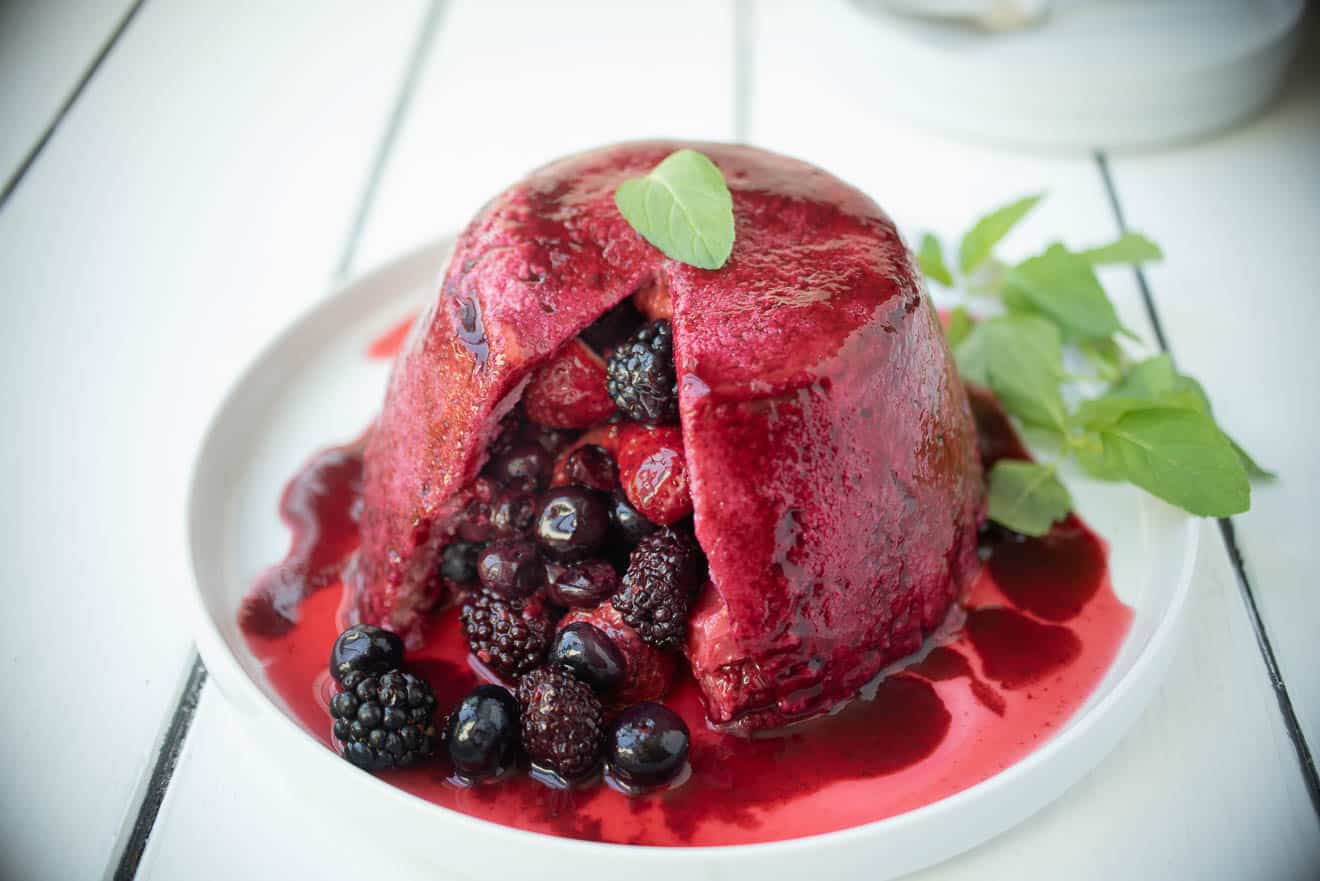
Spend the summer like a Brit with my easy British Berry Summer Pudding. This no-bake snack uses just three ingredients to turn fresh berries and bread into a juice-filled masterpiece. Encased in a bread crust that soaks up every drop of sweet fruit juice, it’s the perfect summer showstopper – and no oven required! Just serve with fresh poured cream or vanilla ice cream for the ultimate seasonal dessert.
Ingredients
- Granulated/caster sugar
- Berries (blackberries, raspberries, blueberries, strawberries)
- White bread slices
- Heavy cream/double cream
Wait…white bread for dessert?
If you’re thinking, “Bread in pudding? That’s for sandwiches!” – listen to me! This is where the magic of this classic British dessert happens.
While it may seem strange to use plain white bread slices, it’s actually this recipe’s secret weapon for three specific reasons:
- Main Sponge: Unlike cake or brioche, which can become soggy or fall apart, sturdy white bread acts like a structural sponge. It’s designed to absorb every drop of extra-sweet berry juice without losing its shape. The crust is removed.
- “Magical” Transformation: When the custard is refrigerated overnight, the bread is completely transformed. It loses its “bread” texture and becomes a soft, fruit-filled vessel that looks more like soft steamed pudding than a sandwich.
- Blank Canvas: Because white bread is neutral, it doesn’t compete with berries. This makes blackberries, raspberries, and strawberries the stars of the show.
You can change it up a bit by using brioche bread slices. Both options are delicious, but the brioche adds a subtle richness that pairs perfectly with the tart fruit! This recipe has been a favorite here since 2021.

What is an English pudding?
In the UK, the word “pudding” is used more widely than in the US. Here are the details:
- This is the Course: In British English, “pudding” is just another word for dessert. If someone asks “What’s the pudding?”, all they mean is “What’s the dessert?”
- It’s Not Just Custard: While Americans usually mean a soft, spoonable pudding, British puddings are often structured cooked dishes that you can slice into – like Sticky Toffee Pudding and English Christmas Pudding.
- ICan’t Be Savory: Some of the most famous English puddings are not sweet at all, such as Yorkshire Pudding (savory dough) or Black Pudding (breakfast sausage).
Bottom Line: For Your Summer Pudding, “pudding” refers to the traditional method of wrapping ingredients (in this case, fruit) in molds for setting.
The history of summer pudding dates back to the 19th century and it is also known as hydropathic pudding. Hydropathy, which is now known as hydrotherapy. Not sure why.

No-Bake Summer Pudding
This is an amazing no-bake dessert done upside down! Although there is a bit of “cooking” involved, all it involves is melting a little sugar in water and simmering over medium heat with the berries until the sugar dissolves and releases its delicious juice. It’s so fast, you can’t call it cooking!
To form the pudding’s signature dome, you simply line the bowl with slices of bread soaked in rich fruit juice. Don’t worry if the cut doesn’t look perfect—as long as there are no gaps, everything will work out. Once weighed and chilled in the refrigerator, the pudding will set and form a beautiful masterpiece that can be sliced and holds its shape perfectly.

The best berries to use
The most common fruits for this classic are blackberries, raspberries, and blueberries (I like to add strawberries too!). For a more unique look, you can also use red, black, or white currants, loganberries, and even cherries.
Which makes the pudding basin unique
- Steep Side: The walls are nearly vertical, which helps the pudding maintain its structural “tower” shape once unmolded.
- Lips (Fringes): This is the most important feature. The protruding rim is designed so you can tightly tie the pleated baking parchment and aluminum foil cover with kitchen string. This prevents steam from getting into the pudding and making it soggy.
- Material: Traditionally made from heavy stoneware or vitrified ceramic (like the iconic white and cane Mason Cash bowl), these bowls are made to withstand hours of boiling without cracking.
Unlike standard mixing bowls, pudding basins have a different design intended for the high heat and humidity of a stovetop water bath or pressure cooker.
More fresh berry recipes to try
If you like this pudding, don’t miss these other reader favorites:
- Berry Custard Tart: A sophisticated dessert featuring crispy shortcrust pastry and creamy vanilla custard topped with glazed berries.
- Mixed Berry Cobbler: The ultimate comfort food! This easy cobbler is full of sweet fruit and topped with a golden cake-like crust.
- No-Bake Lemon Berry Tartlets: Refreshing and savory, these bite-sized treats combine a buttery crust with a filling of lemon cream and fresh summer fruit.

British Berry Summer Pudding
A mixture of berries and juice fills a dome made of white bread.
Portion 8 -10
Calories 303kcal
- ½ cup (100 grams) granulated/caster sugar
- 1 ½ pound 681 grams of mixed berries (blackberries, raspberries, blueberries, strawberries)
- 7 or 8 slices of white bread or brioche
- 2 cup (472 ml) heavy cream (whipped or not)
-
Add sugar and ½ cup (118 ml) water to a saucepan over medium heat. Stir until the sugar dissolves.
-
Add the berries and cook until they begin to soften, but still hold their shape and release some of their juices. Remove from the heat and strain the juice from the fruit, reserving the juice.
-
Place a 4-cup/1-quart bowl on a plate (to catch any liquid). Cut bread into circles to fit the bottom of the bowl. Dip the bread pieces into the juice until soaked. Place in the bottom of the bowl
-
Cut rectangles to line the sides of the bowl, with no gaps, but no overlap. Trim and slice the bread as needed to make it fit.
-
Pour the fruit into a bowl and make an even layer. Pour the remaining juice over the fruit. Cut the bread into circles according to the size of the top (no need to soak in juice). Place on top.
-
Place a plate on top of the pudding (so it sits on the bread, not the bowl) to weigh it down and place something heavy, like an unopened can of beans or soup and refrigerate for 8 hours or more.
-
To serve, remove the tin and plate. Use a knife to carefully loosen the bread from the edge of the bowl so it comes out easily. Place a large plate on top of the bowl and turn it over (there will be some juice so be careful) then remove the bowl and chop gently. Serve with cream.
Portion: 1 | Calories: 303kcal | Carbohydrate: 34G | Proteins: 7G | Fat: 16G | Saturated fat: 9G | Polyunsaturated fats: 5G | Trans Fat: 1G | Cholesterol: 107mg | Sodium: 291mg | Fiber: 2G | Sugar: 8G
PakarPBN
A Private Blog Network (PBN) is a collection of websites that are controlled by a single individual or organization and used primarily to build backlinks to a “money site” in order to influence its ranking in search engines such as Google. The core idea behind a PBN is based on the importance of backlinks in Google’s ranking algorithm. Since Google views backlinks as signals of authority and trust, some website owners attempt to artificially create these signals through a controlled network of sites.
In a typical PBN setup, the owner acquires expired or aged domains that already have existing authority, backlinks, and history. These domains are rebuilt with new content and hosted separately, often using different IP addresses, hosting providers, themes, and ownership details to make them appear unrelated. Within the content published on these sites, links are strategically placed that point to the main website the owner wants to rank higher. By doing this, the owner attempts to pass link equity (also known as “link juice”) from the PBN sites to the target website.
The purpose of a PBN is to give the impression that the target website is naturally earning links from multiple independent sources. If done effectively, this can temporarily improve keyword rankings, increase organic visibility, and drive more traffic from search results.
Comments are closed, but trackbacks and pingbacks are open.