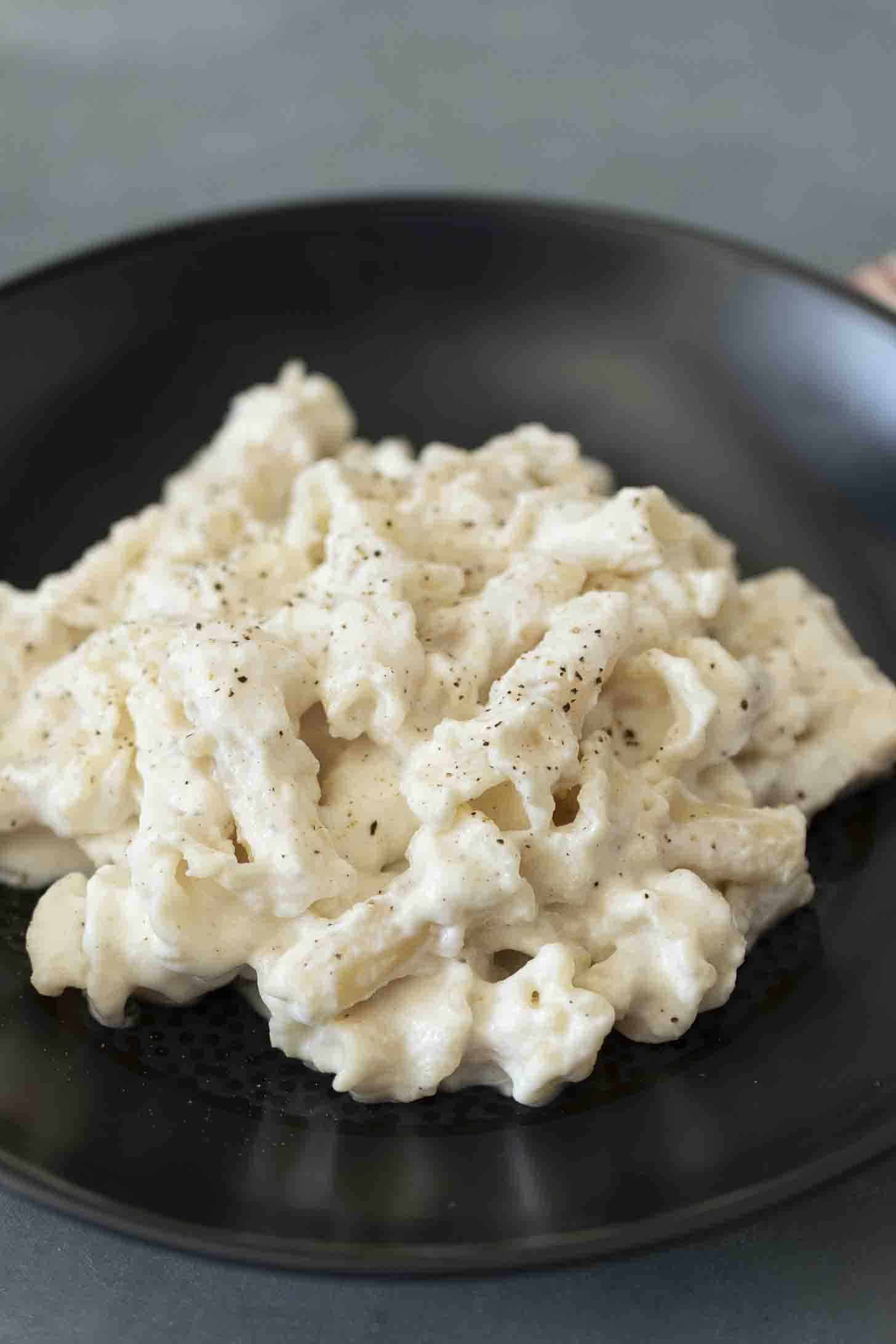
Traditional Italian pasta sauces usually fall into two categories: red or white. My Easy 3 Ingredient Ricotta and Pecorino Pasta Sauce is a no-cook creamy sauce from the Liguria region. This proves that you don’t need to cook for a long time to get deep, authentic flavors.
What’s also great about this is that it doesn’t need to be cooked at all – just pasta. If you can boil water, you can make it. This is a decadent creamy sauce made with just three simple ingredients: ricotta, Pecorino Romano, and ground black pepper.
The Story Behind White Pesto Sauce
We all know the ever-popular Marinara and Bolognese sauces, but in Italy, there is also a white sauce often called Bianca. You Can let’s call this White Pesto. But while we usually associate pesto with the famous green basil version – whose name is taken from the Italian word for to pound – this pasta recipe offers a different take on that rustic tradition.
Instead of using a mortar and pestle to crush the herbs, this version uses a hand-mixed method to produce a smooth, whipped consistency. It honors the spirit of pesto as a fresh, raw sauce, but trades the hard work for easy creaminess.
Pesto Bianco Ligure: The History of a White Sauce
The origins of this sauce are rooted in the Ligurian Alps, a mountain range located just east of the border of Italy and France. This is where you will find the local cuisine known as La Cucina Bianca (the white kitchen or white cuisine). Because these mountain communities have limited access to fresh Mediterranean vegetables, they create recipes based on white ingredients such as flour, dairy products, nuts, and garlic-free cheeses.
Cacio e Pepe Meets American Alfredo
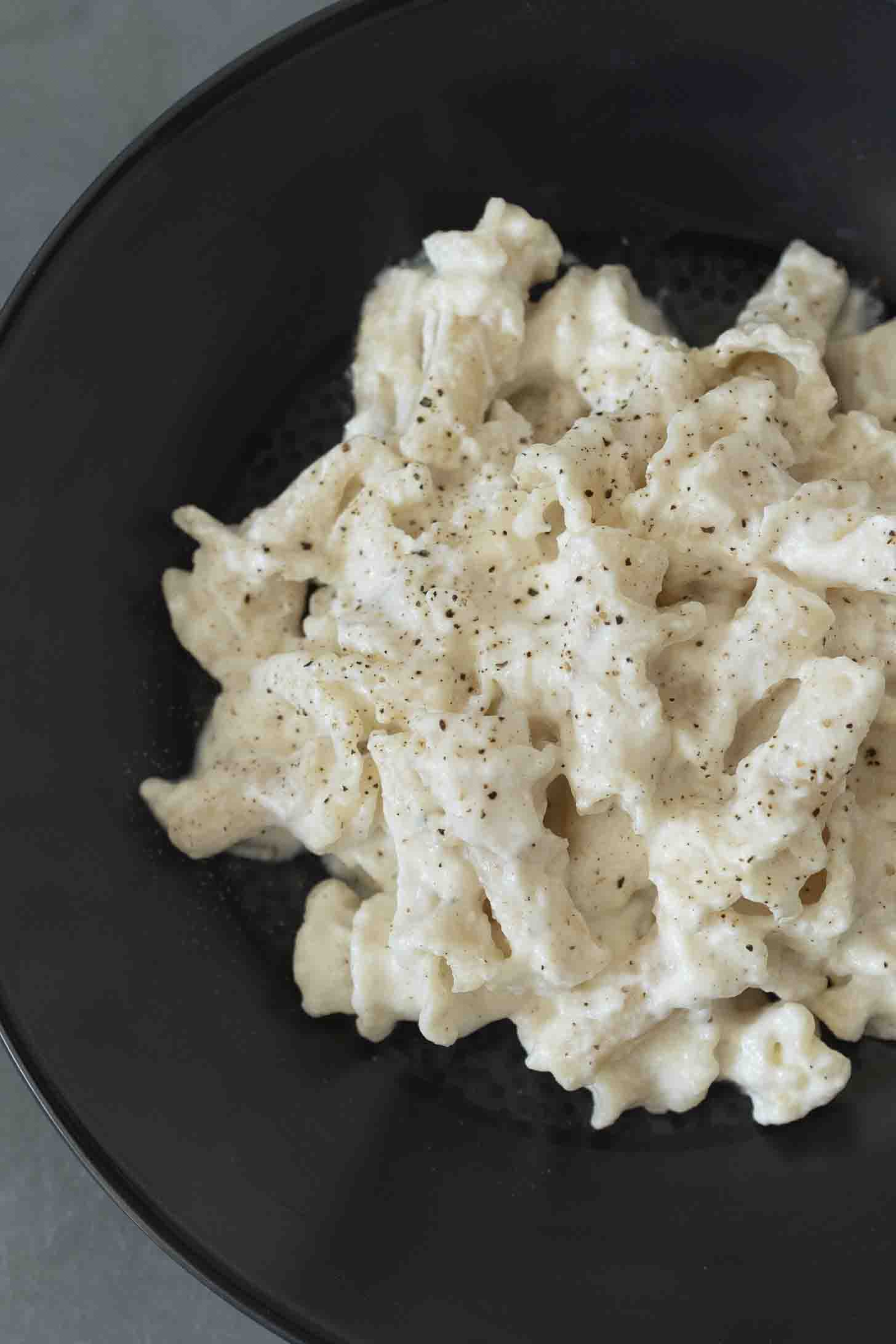
Creamy ricotta sauce mixed with tangy Pecorino is a delicious combination that produces pasta cremosa (creamy pasta).
This is a white cheese dip that you can add so much to, but it’s perfect in its simplest form. Unlike most thick sauces, there is no garlic in it because it is a sauce that does not require cooking. This allows the high-quality cheese to be the star.
Different Types of Ricotta
In Italy, there are two common types of ricotta: cow’s milk and sheep’s milk. Sheep’s milk ricotta is sharper, like Pecorino cheese, but not as common or easy to find in the US.
Although traditional pasta recipes call for sheep’s milk ricotta, to solve this problem, I added Pecorino Romano (a hard sheep’s milk cheese similar to Parmesan) to the mix. It mimics a distinct, tangy profile and provides the perfect salty bite to balance the creamier cow’s milk ricotta, bringing this dish closer to its traditional roots.
An Authentic Twist on Alfredo
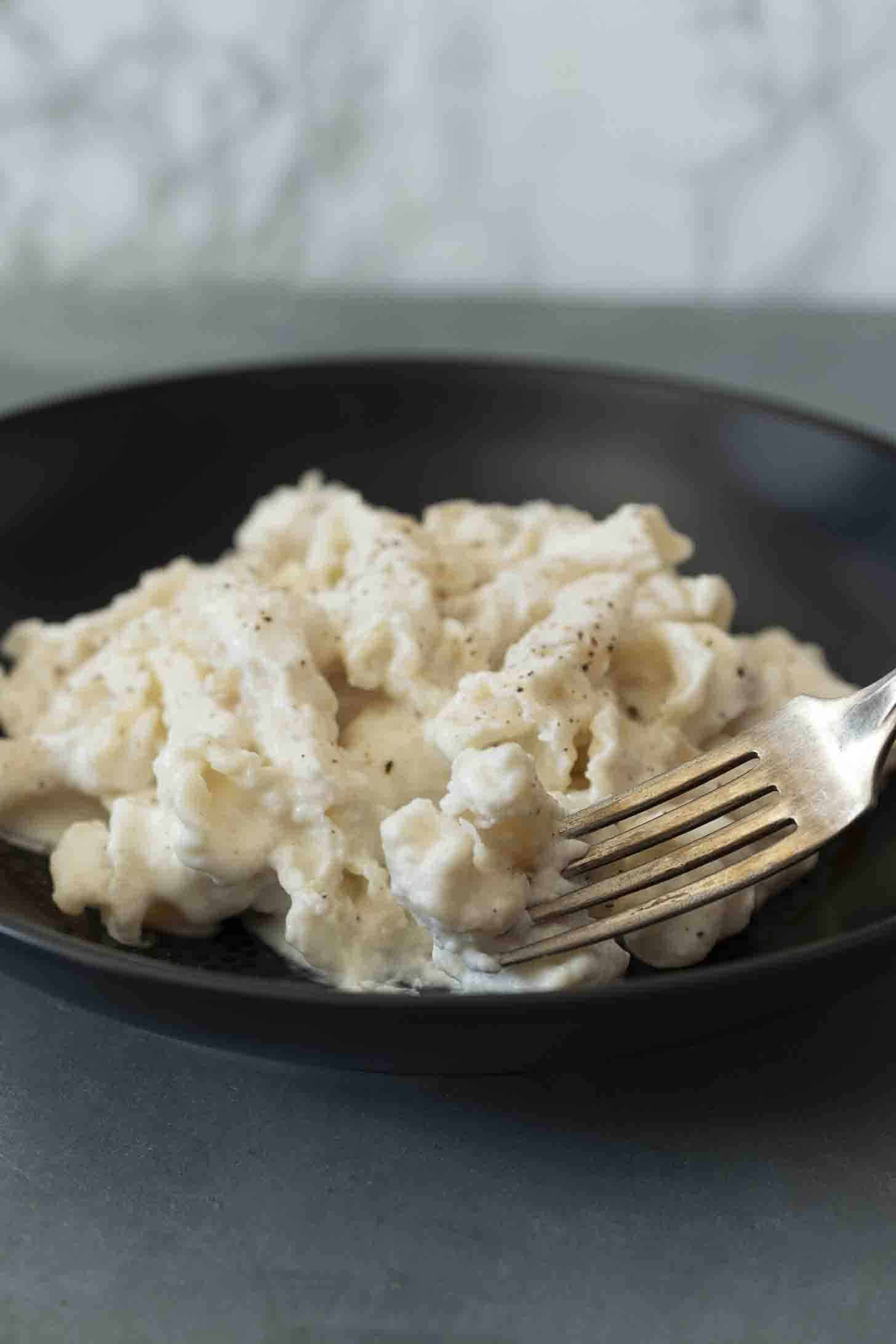
It’s worth noting that real Alfredo sauce is different in Italy than it is elsewhere. In its original form, it’s just butter and Parmesan – the Roman predecessor of the thick, cream-based American Alfredo sauce. This recipe honors the tradition of simplicity by using high-quality dairy products to create a rich texture without heavy fillers.
Optional Additions to This Sauce Recipe
- lemon zest
- Fresh basil, chopped
- Cook the pancetta or bacon pieces
- 1 or 2 cloves of garlic
- Protein of your choice (cooked chicken or shrimp)
- A good drizzle of olive oil to finish the dish
Tips for Success
- Don’t Skip the Pasta Water: This is the most important rule! Before you drain the pasta, reserve at least one cup of pasta water from the pan. Since this is a no-cook sauce, hot water is the magic ingredient that helps the Pecorino cheese melt and turns the ricotta into a creamy sauce.
- New Grate is the Best: For this pasta recipe, avoid shredded cheese in green cans or plastic bags. Contains anti-caking ingredients that prevent the cheese from melting smoothly. Grate your Pecorino Romano fresh and finely for the best texture.
- Use Room Temperature Ricotta: Take your ricotta out of the refrigerator about 30 minutes before cooking. Adding cold cheese to your pasta will instantly lower the temperature of the dish. By using room temperature ricotta, the heat from the paste and the remaining water will produce a smoother, warmer emulsion.
- Consistency Control: Add the pasta water slowly – a little at a time. You are looking for a creamy emulsion. If it’s too thick, add more water; if it’s too runny, an extra handful of pecorino will thicken it again.
- Season Carefully: Pecorino Romano is a naturally salty sheep’s milk cheese. Always taste your sauce before adding extra salt! You’ll probably find that between the salty cheese and the salty pasta water, you only need a pinch.
- Use High Quality Pepper: Since black pepper is one of the three main ingredients, use freshly cracked pepper whenever possible. This provides a heat that ground pepper can’t match.
Storing and Reheating Leftovers
If there are any leftovers, you can store them in an airtight container in the refrigerator for up to 3 to 4 days. However, there are two things you need to know about saving this sauce for later:
- Sauce Will Thicken: Once cool, the ricotta and Pecorino Romano will firm up and the sauce will lose its creamy consistency. Don’t worry if the pasta looks dry or lumpy the next day – this is normal for cheese sauces.
- Water Sprinkling Rules: To revive that silky texture, don’t just reheat it as is. Add a little water (or a teaspoon of milk) to the bowl before reheating.
- Reheat gently: Use low heat on the stove or place in the microwave for 30 seconds, while stirring. This prevents the cheese from breaking or becoming greasy. As it heats up, the added moisture will help the ricotta loosen back into a creamy sauce.
Easy 3 Ingredient Ricotta and Pecorino Pasta Sauce (No Recipe)

This traditional, no-cook, creamy ricotta and pecorino sauce mixed with pasta is the ultimate quick meal. By using the heat from the remaining water to create a thick emulsion, you get a luxurious whipped texture. All you have to do is cook the pasta.
Boil pasta:
-
Fill a large pot ¾ full with water. Bring to a boil and add pasta. Cook according to package instructions. Important: Before draining, reserve about 1 cup of the hot, starchy pasta water.
Make the sauce:
-
Add the ricotta and Pecorino Romano to a blender or food processor. Pulse until evenly mixed. Notes: You can beat it by hand in a large bowl, but a blender will produce a smoother, professional-grade finish.
-
Add black pepper to the cheese mixture. On low speed of your blender or food processor (or while whisking vigorously), slowly pour in the hot pasta water ¼ cup at a time. Check the consistency. If it’s too thick for you, add more pasta water until the mixture forms a smooth, creamy sauce
-
Taste and season with more salt and pepper if necessary (remember, Pecorino is naturally salty).
-
Transfer the sauce to a serving bowl. Add the hot, drained pasta directly into the sauce. If the pasta looks dry, add a little of the remaining pasta water to emulsify. Serve immediately.
Make sure the ricotta is not cold as it can cool the hot pasta when stirred.
Use whole fat ricotta. Using low-fat ricotta may result in small grains or lumps of curd and it may not be completely smooth. Part-skim or fat-free options are often grainy, watery, and don’t have the creamy texture of whole milk options. Also, some mass-produced brands that lack fat or are made by heating milk/whey too quickly. Some brands use stabilizers such as gum, which can cause the ricotta to ooze and become grainy when cooked.
PakarPBN
A Private Blog Network (PBN) is a collection of websites that are controlled by a single individual or organization and used primarily to build backlinks to a “money site” in order to influence its ranking in search engines such as Google. The core idea behind a PBN is based on the importance of backlinks in Google’s ranking algorithm. Since Google views backlinks as signals of authority and trust, some website owners attempt to artificially create these signals through a controlled network of sites.
In a typical PBN setup, the owner acquires expired or aged domains that already have existing authority, backlinks, and history. These domains are rebuilt with new content and hosted separately, often using different IP addresses, hosting providers, themes, and ownership details to make them appear unrelated. Within the content published on these sites, links are strategically placed that point to the main website the owner wants to rank higher. By doing this, the owner attempts to pass link equity (also known as “link juice”) from the PBN sites to the target website.
The purpose of a PBN is to give the impression that the target website is naturally earning links from multiple independent sources. If done effectively, this can temporarily improve keyword rankings, increase organic visibility, and drive more traffic from search results.
Comments are closed, but trackbacks and pingbacks are open.